
Homeschool Curious

Is Homeschool The Best Option For Your Child (A Complete Guide To Choosing The Right Option!)
Maybe you have a child approaching school age and you’re wondering if traditional school is the right fit.
Or, perhaps your child is already in the school system, but something isn’t quite working, and you’re considering shifting to a homeschooling journey instead.
Let’s break down all of your options!
Homeschool Curious?
Hello and welcome to The Harmonious Classroom blog! This post is for the homeschool curious. So, you’re interested in homeschooling but there are still SO many hesitations and uncertainties floating around in your head.
Maybe you have a child approaching school age and you’re wondering if traditional school is the right fit. Or, perhaps your child is already in the school system, but something isn’t quite working, and you’re considering shifting to a homeschooling journey instead.
Today, we’re going to talk about what homeschooling really is, clear up some common misconceptions, and explore why it’s growing in popularity.
What Is Homeschooling?
Homeschooling is when your child learns at home rather than attending a traditional or private school. That’s it.
Despite its simplicity, there are plenty of misconceptions. Some of the most common misconceptions are:
Homeschooled children don’t get proper socialization
I’m not qualified to homeschool because I’m not a trained teacher
I have to purchase a curriculum and spend hours a day teaching my child.
Let’s unpack these and explore the real story.
Why Is Homeschooling Growing in Popularity?
In Canada and the U.S., the number of homeschooled children has DOUBLED in the last 15 years! DOUBLED! Parents are acknowledging that their family’s values or their child’s learning style may not align with the traditional school system. Many parents want more time with their children and want to create a learning environment that nurtures their child’s natural curiosity.
Some families also recognize that by sending their child away for six hours a day, five days a week, they are entrusting their child’s learning, social & emotional development (and even their subconscious development,) to someone else entirely. Now, here me out… there are some truly AMAZING teachers out there, (you know who you are!) However, there are also teachers who are burnt out, nearing retirement, or simply don’t enjoy the job. It’s natural for parents to wonder if this arrangement will really be the best fit for their child. You might feel like you’re ‘rolling the dice’ on what type of teacher your child will get.
Curriculum and Teaching
One misconception is that homeschooling must mirror traditional schools. Some families choose to buy a curriculum online, set up a table space, and expect their child to sit and learn for several hours a day. But let’s take a second and think back… why did you consider homeschooling in the first place? Was it because traditional school didn’t fit your child’s learning style, or because you didn’t want their creativity stifled?
Here’s the truth: you don’t have to mimic the school system. One of the biggest advantages of homeschooling is FLEXIBILITY. Learning can take place at any time and in any way. Children are learning all the time…through conversations, play, cooking, nature walks, library trips, community activities, and even household chores.
If you do want to follow a curriculum, that’s perfectly fine. Homeschooling is about what works for your child and your family. It’s not necessary to recreate the public school system at home.
For a deeper dive on curriculums check out… Do You Really Need a Curriculum?
But I’m not a teacher…
You might worry, “I don’t think I can homeschool because I’m not a teacher.” Let’s take a minute to remember that from the moment of birth, YOU have been your child’s first teacher. Think back to the first time that your baby learned to clap their hands, or say ‘mama’... they likely learned it from imitating YOU.
Now, I hear the concerns… “Yeah, Laura I can teach a baby to say ‘Mama’ but I don’t think I can teach my kids long division.”
I get it. There’s a difference.
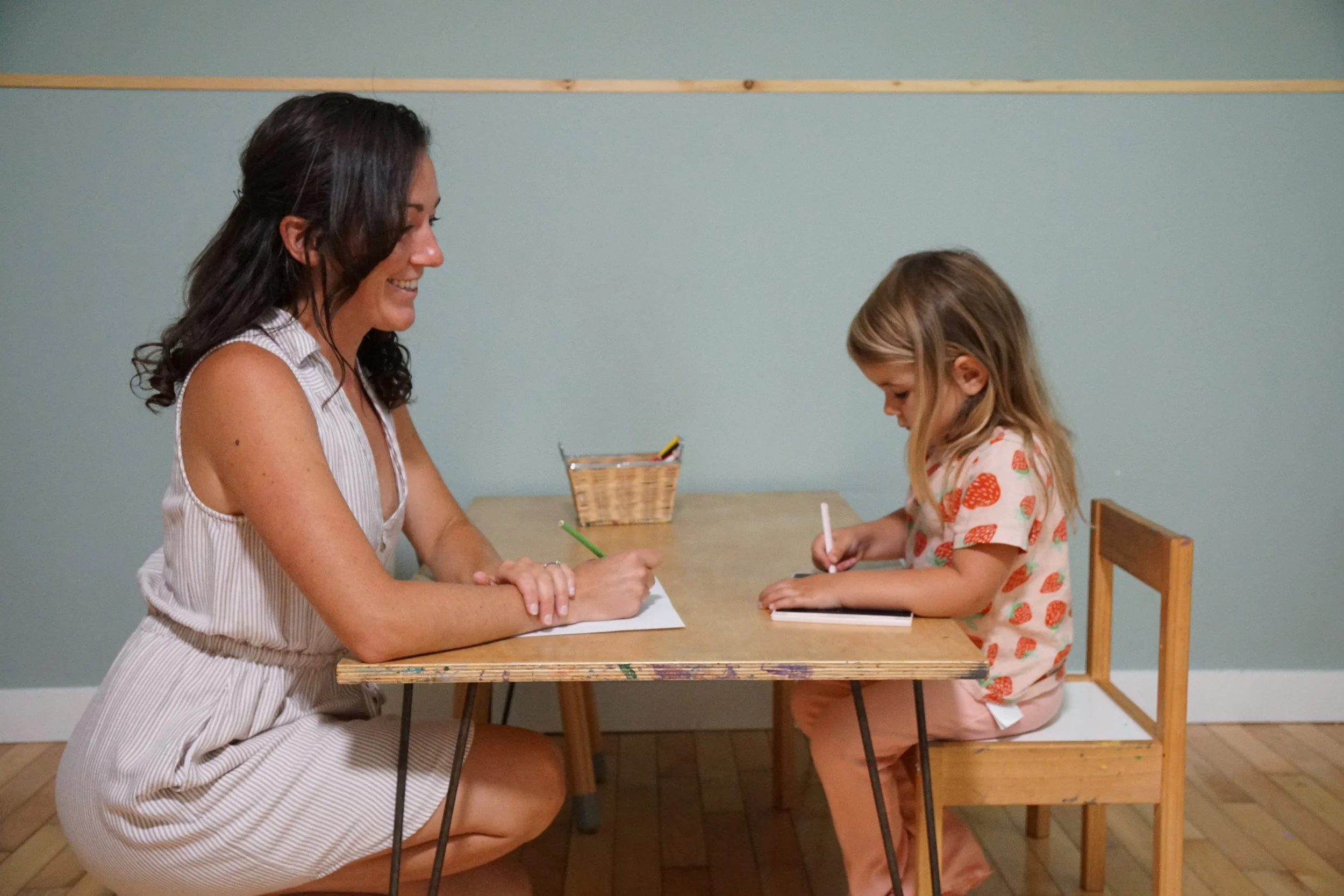
If teaching doesn’t come easily to you, please know that it’s totally okay to learn alongside your child. Often with homeschooling, you are learning with your child, instead of just ‘teaching’ them everything that you already know. Learning alongside your child gives them an advantage- you can really take some time to tune into your child’s unique learning style. You can explore different approaches and understand how they learn best. You can even both learn (or re-learn) new concepts together.
You don’t have to do it all alone. Consider creating a learning network for your child by inviting community members or local experts to help: maybe it’s a neighbour passionate about woodworking, an elder who loves story telling, or a local high schooler who excels in math and is looking for some volunteer hours. This expands learning opportunities and reduces pressure on you.
Keep in mind that in a traditional Kindergarten classroom with around 20 children, most of the day is spent on classroom management, transitions, hand washing, and navigating conflicts. In fact, there is usually less than an hour of academic learning each day. This means that at home, especially in the early elementary years, just an hour or two of focused, direct teaching per day is typically all that’s needed. If you follow a self-directed learning approach, your role is mainly to observe, guide, and step in when there is an appropriate invitation to teach a new concept or skill.
Community and Socialization
Socialization is another common concern that people have about homeschooling. Many people assume that simply being around other children at school gives kids enough time to socialize. In reality, most of their day is teacher-directed, leaving very little time for genuine, child-led social interaction.
Humans are designed to live, learn, and grow in groups, but separating children strictly by age isn’t really natural. Children can, and do, learn from people of ALL ages. Socialization isn’t just about spending time with peers who are in the same grade as you.
Mixing ages can actually be a better way to socialize children. Younger children look up to older peers who have already mastered skills they are trying to learn, while older children can develop leadership and care-giving skills by mentoring younger ones. Socialization isn’t just about other children either; it’s also important for children to learn to interact confidently and respectfully with adults too. Socializing is learning how to be a part of, and interact within a community.
Homeschooling provides unique opportunities for daily integration into society. Your child might:
Check out books independently at the library
Order food at a restaurant or pay for something by themselves
Go to the post office and send a letter to a friend
Every opportunity to engage within society helps your child to learn social skills and develop independence in real-world settings.
The Big Picture
Homeschooling is about creating a learning environment that works for your child and your family. Let it be flexible. You don’t need to replicate the school system, and you don’t need to be a certified teacher. You simply need to show up, observe, guide, and learn alongside your child.
If you’re homeschool curious, take your time exploring, asking questions, and discovering what works for your family. There’s no single “right” way to do it. You’ve got this!
Have questions that you want answered about Homeschool vs. Traditional School?
I offer 1:1 consulting that you can book right here.
